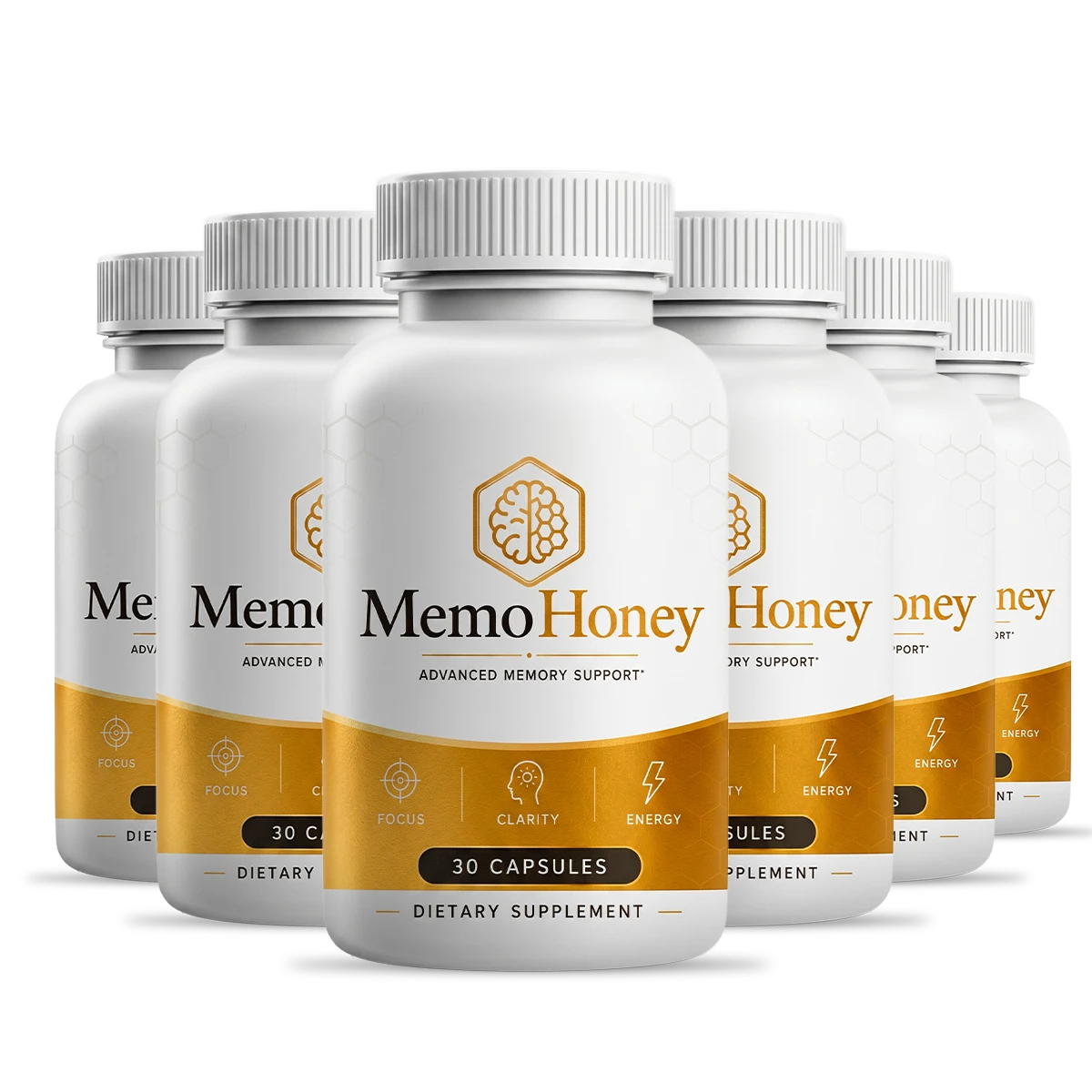
MemoHoney is a daily capsule built on four nootropic ingredients — Bacopa monnieri, Rhodiola rosea, L-theanine and Panax ginseng. One of them has genuine meta-analysed memory evidence. The others are better supported for attention, stress and fatigue than for memory itself. This page separates the two, and covers the timeline that determines whether you will notice anything at all.
Illustrative only — not data from any trial of this product.
Nootropic formulas are usually sold as though every ingredient contributes equally to the headline claim. They do not. Here is each one rated for memory specifically — which is what this product is named for.
The only ingredient here with meta-analysed evidence for memory recall in healthy adults. Requires 8–12 weeks of consistent use.
Reasonable evidence for mental fatigue and stress-related performance. Much weaker evidence for memory as such.
Good evidence for calm alertness, largely from studies pairing it with caffeine. Alone, the effect is relaxation rather than recall.
Some short-term cognitive findings, inconsistently replicated. More often associated with fatigue and general vitality.
If there is one practical fact worth taking from this entire site, it is this one — and it determines whether anyone gets value from a Bacopa-based product.
No memory effect is expected. L-theanine may produce a mild sense of calm within the hour, and Rhodiola may reduce fatigue. Neither is what the product is named for.
This is where the majority of people quit and conclude a nootropic does not work. Bacopa trials have not begun measuring outcomes at this stage.
Where Bacopa trials measure results. Effects reported are modest — improved recall of learned information, not a transformation in general intelligence.
The 60-day window closes at roughly week eight, counted from purchase. You are asked to decide at the exact point the science says to start looking.
This is the most important section on this page, and it is the one memory-supplement marketing never includes. If you or someone close to you has noticed a genuine change in memory, the priority is finding out why — not buying something to mask it.
Occasional forgetfulness — a name that will not surface, walking into a room and forgetting why — is normal at any age and is not what this list describes. The distinction that matters is whether it is interfering with daily function, and whether it is getting worse.
To be direct, because this category is marketed heavily to people who are frightened: no dietary supplement treats, prevents or reverses Alzheimer's disease or any other dementia. The US Food and Drug Administration has repeatedly acted against companies making such claims, and the Federal Trade Commission has brought enforcement cases over unsupported memory-improvement advertising.
Products in this category legally cannot claim to treat any condition, which is why they use phrases like "supports memory" and "promotes mental clarity". That wording is a legal requirement, not a modest description of a proven effect.
Buying them a supplement is a natural impulse and an understandable one. A GP appointment is more useful. Bring specific examples of what has changed and when it started — that is far more informative to a clinician than a general sense that something is wrong.
Further reading: when memory changes need a doctor · what actually protects cognition · our full health disclaimer
These claims describe how the product is made. They matter for consistency and contamination control — and say nothing about whether the formula works.
Produced domestically rather than imported as a finished good.
Registered with the FDA — not the same as the product being FDA-approved. No supplement is.
Covers batch consistency, cleanliness and record keeping.
Botanical extracts and amino acids, stated free from GMOs.
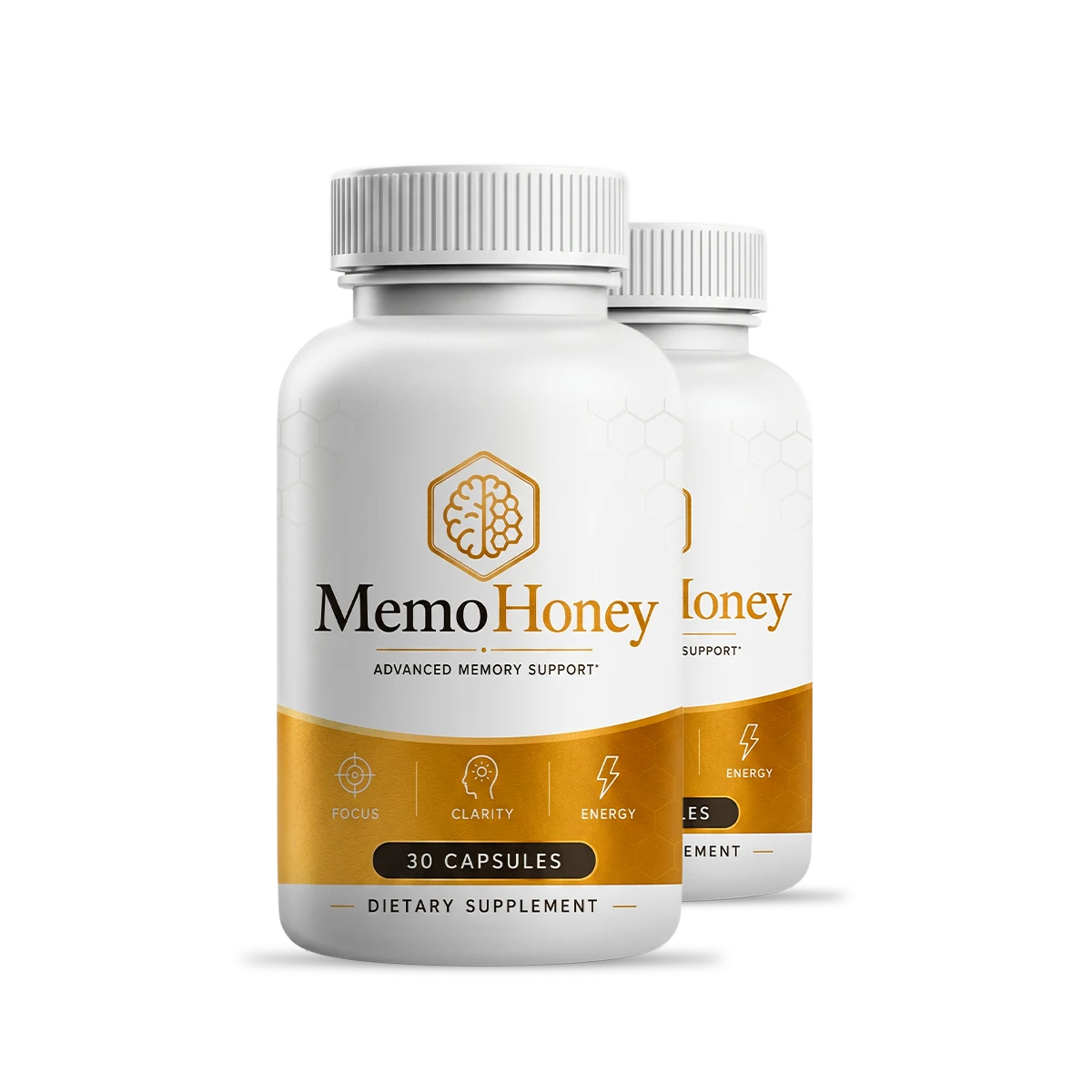
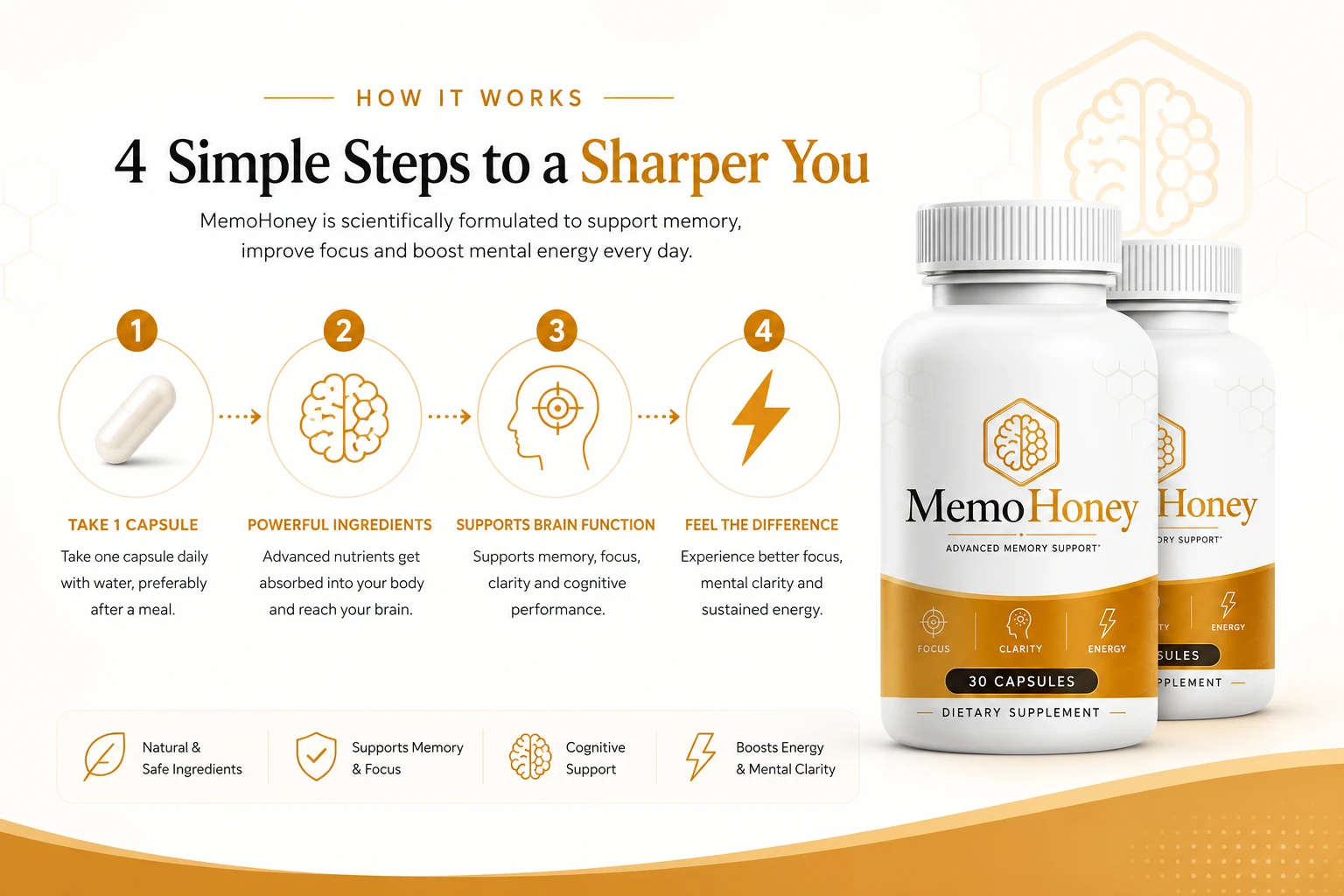
MemoHoney is a daily dietary supplement sold in capsule form, taken once each morning with water. Each bottle holds 30 capsules — a 30-day supply. It belongs to the nootropic or cognitive-support category, aimed at adults who want help with memory, focus and mental clarity.
The formula combines three botanical extracts with one amino acid: Bacopa monnieri, a herb from Ayurvedic medicine with the best memory research of the four; Rhodiola rosea, an adaptogen studied for fatigue; L-theanine, an amino acid from tea leaves associated with calm alertness; and Panax ginseng, studied for energy and cognition.
Read the detailed breakdown on what MemoHoney is, or go straight to the ingredient analysis.
Six pathways the formula targets, described in terms of what research on these compounds actually examines — and where the evidence stops.
Bacopa's proposed mechanism involves effects on dendritic branching and cholinergic signalling — pathways central to forming and consolidating new memories. This is slow, structural, and consistent with the long timeline.
Bacosides show antioxidant activity in neural tissue in preclinical work. Plausible as a contributing mechanism, though a long way from demonstrated clinical benefit in humans.
Rhodiola is studied for the stress response and stress-related fatigue. Since sustained stress measurably impairs working memory and concentration, this is a genuinely relevant indirect route.
L-theanine increases alpha wave activity, associated with relaxed alertness. This is one of the better-characterised effects in the whole nootropic field — it just is not a memory effect.
Panax ginseng has research on circulation and on short-term cognitive measures. Results across trials are inconsistent, and preparations vary considerably.
Both Rhodiola and ginseng have their most consistent findings here rather than in memory. Reduced fatigue can feel like improved cognition, which is worth separating when judging results.
Four actives with the research dosages used in trials, an honest evidence grade, and the safety notes that matter.
The centrepiece and the only ingredient here with meta-analysed evidence for memory in healthy adults. Multiple randomised trials report modest improvements in recall of learned information, with effects consistently emerging at 8 to 12 weeks rather than sooner.
Two things to know: standardisation matters enormously — an unstandardised extract is not equivalent to a 50% bacoside one at the same weight. And it commonly causes stomach upset taken on an empty stomach, which food largely resolves.
Read the research →An adaptogen with reasonable evidence for mental fatigue and stress-related performance decline — studies in shift workers, students during exams and physicians on night duty. Fast-acting relative to Bacopa, with some trials reporting effects within a week or two.
Worth knowing: the evidence is for fatigue and stress resilience, not memory formation. It can also be overstimulating for some people, particularly taken late in the day.
Read the research →One of the best-characterised compounds in this space. It increases alpha brainwave activity and produces relaxed alertness without sedation — a genuinely reliable and pleasant effect.
The important qualification: most of its attention and focus evidence comes from studies combining it with caffeine. The pairing is well supported; L-theanine alone is better evidenced for calm and reduced anxiety than for sharpened performance. This formula does not appear to contain caffeine.
Read the research →Widely studied and inconsistently replicated for cognition. Some trials report short-term improvements in working memory and reaction time; others find nothing. Its more reliable findings relate to fatigue and general vitality.
Interaction note: Panax ginseng interacts with warfarin, can affect blood glucose in people on diabetes medication, and may be stimulating enough to disturb sleep.
Read the research →MemoHoney is sold in two, three and six-bottle bundles through the official checkout. Each bottle holds 30 capsules — a 30-day supply at one daily. Current pricing, discounts and shipping terms are confirmed at checkout, so we are not quoting figures we cannot verify.
Highest cost per bottle — but 60 days is the minimum realistic trial for Bacopa, so this is the smallest package that makes scientific sense.
Check Price
Lowest per-bottle cost. Note that 180 days sits well outside the 60-day guarantee window.
Check Price
The tier that best matches the research timeline — Bacopa trials generally run 8 to 12 weeks before measuring anything.
Check Price
Rather than publish testimonials we cannot verify, we have grouped the themes that recur across nootropic supplements in this category — including the critical ones.
The most commonly reported effect across L-theanine-containing products, and one of the few that appears within the first week. Described as reduced mental noise rather than stimulation.
Consistent with Rhodiola's better-supported effects. Worth distinguishing from memory improvement — feeling less tired makes thinking easier without changing recall.
Reported by the minority who persist past eight weeks — which is consistent with how Bacopa behaves in trials, and is exactly the group most people never join.
The most common criticism of every nootropic, and frequently a timeline problem rather than a product problem — most people stop at two to four weeks, well before Bacopa research measures anything.
A well-documented Bacopa effect, particularly on an empty stomach. The label directs morning use; taking it with breakfast rather than before usually resolves it.
The informed criticism. Without milligram amounts and standardisation percentages, buyers cannot tell whether they are getting research-comparable extract or a token amount.
The list opposite reflects how MemoHoney is advertised. We have kept the manufacturer's claims intact so you can see them, and graded each against what the evidence supports.
Note the phrasing: "supports", "helps improve", "promotes". This language is legally required for dietary supplements — a supplement cannot claim to treat, cure or prevent anything, including cognitive decline.
Supported by one ingredient, on a long timeline. Bacopa has meta-analysed evidence for modest recall improvements at 8–12 weeks. Dose here is undisclosed.
Reasonably supported. L-theanine's calm-alertness effect is real and fast. Note that its strongest attention evidence involves pairing with caffeine, which this does not contain.
Plausible but vague. "Clarity" is not a measurable outcome. Reduced fatigue from Rhodiola is the most likely contributor to any subjective sense of it.
Reasonably supported. Rhodiola's most consistent finding across trials, and arguably the effect most people will actually notice from this formula.
Reasonably supported. Rhodiola and ginseng both have fatigue-related evidence. This is a genuine effect, distinct from the memory claim.
Overstated. This phrasing rests on preclinical antioxidant findings. It is a long way from any demonstrated effect on brain health in humans.
Partly supported. Bacopa trials do measure acquisition and retention of new information, which is the closest thing here to a genuine learning claim.
Typically counted from the purchase date.
Sixty days is standard for this industry. For a nootropic built around Bacopa monnieri it is also uncomfortably tight, and that is worth understanding before you order.
Bacopa is the ingredient with the strongest memory evidence in this formula — and its trials almost universally run 8 to 12 weeks before measuring outcomes. Effects are cumulative, not acute. A 60-day window counted from the purchase date means your guarantee expires at roughly the point where the research would only just be starting to look for a result.
Practical suggestion: decide by around day 45 rather than day 58, and be aware you are making that decision earlier than the science would ideally allow. Full detail on the refund policy page.
Direct answers to what people actually search before buying.
Primary sources used in assessing the ingredients on this page. These reference the individual compounds — there is no published clinical trial of MemoHoney as a finished product.
Live pricing, package options and any active promotion are shown on the official checkout page. Orders carry the 60-day money-back guarantee.
Check Current PricePaid link — we earn a commission at no extra cost to you
Ingredient research, label literacy and practical guides.
The treatable causes of memory difficulty that get missed, and the signs that warrant assessment rather than a supplement.
Read article →The best-evidenced memory herb — the meta-analyses, the effect size, and why the timeline defeats most users.
Read article →The interventions with real evidence for protecting cognition, ranked — and where supplements sit among them.
Read article →